Introduction
The demand for renewable energy continues to grow, with solar power playing a pivotal role in global energy systems. As solar fields expand, effective maintenance becomes increasingly important. Enter the world of infrared thermography, a technology that provides precise thermal imaging to detect anomalies in solar panels. In particular, the integration of IEC 62446-3 thermography standards is set to transform solar field infrared surveys, enhancing their accuracy and reliability. This guide explores how these standards impact future energy efficiency and asset management.
Understanding IEC 62446-3 Thermography Standards
IEC 62446-3 is a critical international standard for thermographic inspection of photovoltaic (PV) systems. It outlines the procedures for detecting and analyzing thermal anomalies in solar panels. Adhering to these standards ensures that inspections are thorough, consistent, and reliable across different solar installations, regardless of their location or size. The standard provides guidance on the equipment, calibration, and execution of infrared surveys, making it an essential tool for solar asset managers and facility managers.
Importance of Standards
Standards like IEC 62446-3 ensure a unified approach to thermal inspections. This uniformity is crucial for comparing data across different sites and validating maintenance strategies. By following these standards, facility managers can confidently make informed decisions about repairs and upgrades.
Enhancing Accuracy with Aerial Infrared Thermography
Aerial infrared thermography, particularly when conducted by experienced providers like AIT Scan, enhances the accuracy and efficiency of solar field inspections. Compared to ground-based methods, aerial surveys cover extensive areas in less time, providing a comprehensive view of solar field conditions.
Advantages of Aircraft-Based Surveys
- Extensive Coverage: Aircraft can survey large solar fields in a single flight, capturing detailed thermal maps.
- Detailed Analysis: High-resolution imagery allows for precise detection of faults and thermal anomalies.
- Speed: Aerial surveys reduce downtime by quickly identifying problem areas.
These benefits make aircraft-based infrared scanning particularly advantageous for large-scale solar farms, ensuring that all panels are functioning optimally.
Integrating Predictive Maintenance and Asset Management
Predictive maintenance is a proactive approach that leverages data analysis to predict equipment failures before they occur. By integrating IEC 62446-3 standards with predictive maintenance strategies, solar facility managers can optimize asset performance and reduce operational costs.
Data-Driven Decisions
Infrared thermography provides valuable data that informs maintenance schedules and capital planning. By identifying issues early, such as hot spots or defective panels, managers can address them before they escalate into costly repairs. For more insights on predictive maintenance workflows, visit AIT Scan’s guide.
Case Study: Improving Solar Asset Performance
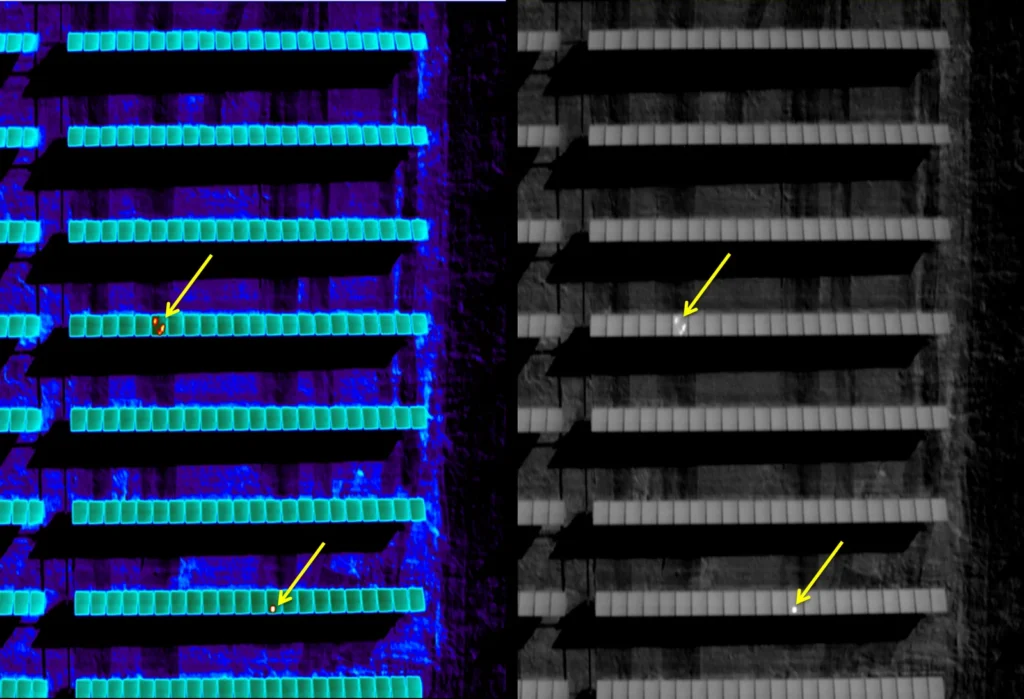
Consider a large solar farm facing periodic performance dips due to undetected panel malfunctions. By implementing IEC 62446-3 standards through aerial infrared surveys, the farm’s management team identified several panels with thermal anomalies. The timely detection allowed for targeted maintenance, restoring the farm’s output to optimal levels.
Outcome
This approach not only improved energy efficiency but also extended the life of the solar assets, demonstrating the ROI of integrating standardized thermography in maintenance routines.
Comparing Inspection Methods
While drones and handheld devices are popular for smaller inspections, aircraft-based infrared scanning provides significant advantages for large solar fields. For a detailed comparison of these methods, visit AIT Scan’s comparison page.
When to Choose Aircraft-Based Surveys
- Large-Scale Projects: Ideal for vast solar farms and distributed assets.
- Comprehensive Coverage: Offers a holistic view of the entire installation.
- Geographical Challenges: Efficiently navigates complex terrains.
Conclusion
The integration of IEC 62446-3 thermography standards in solar field infrared surveys represents a significant advancement in renewable energy maintenance. By enhancing the accuracy and reliability of inspections, these standards empower facility managers to make informed decisions, optimize performance, and ensure energy efficiency. As the industry evolves, embracing these standards will be crucial for maintaining competitive edge and sustainability. To explore how AIT Scan can support your solar asset management, visit our Solar Field Infrared Surveys page.