
Of Infrared Expertise
Plus Alaska & Puerto Rico
Not Drones
For Facility Decision-Makers
High temperature hot water leak detection uses aircraft-mounted infrared sensors to identify thermal anomalies associated with buried HTHW supply and return lines, vaults, insulation failures, and other components of a district energy network. When heat escapes from a buried system, it can create measurable temperature differences at the ground surface that become visible in aerial thermal imagery.
AITscan collects and georeferences these thermal patterns across the distribution network so facility and engineering teams can focus follow-up investigation on suspected problem areas. The findings can help distinguish areas of elevated heat loss, saturated insulation, vault-related anomalies, or potential line failures before maintenance teams commit to excavation or replacement.
For campuses, municipal systems, military installations, and other properties operating extensive HTHW infrastructure, aircraft-based infrared surveys provide a network-wide view that can support maintenance prioritization, capital planning, engineering review, and long-term system documentation.
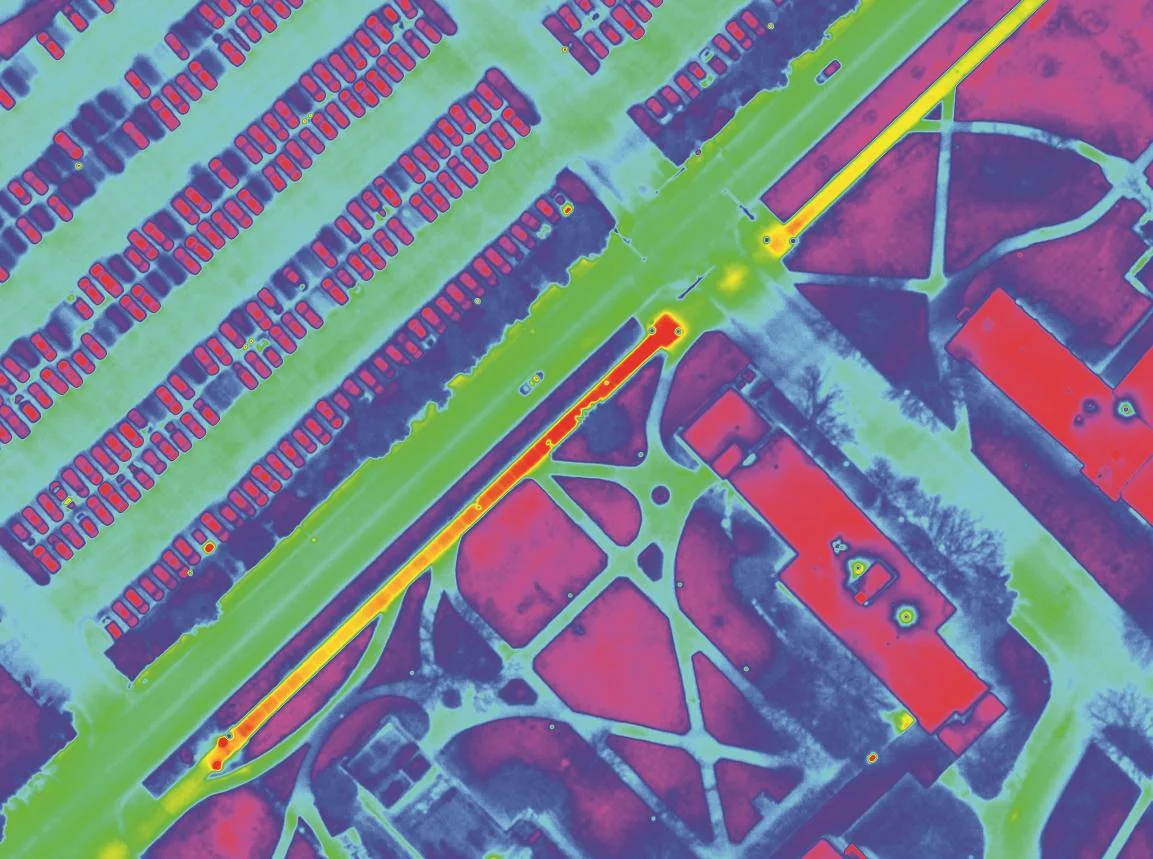
Ground-based thermography and short-range platforms can be effective for isolated vaults or known problem segments. For campuses, municipalities, correctional facilities, and other properties with miles of buried HTHW infrastructure, aircraft-based high temperature hot water leak detection can provide a more complete view of the distribution network within a coordinated thermal window.
AITscan can survey supply lines, return lines, vaults, and distribution corridors during the same mission, helping create a more consistent thermal dataset across the system. That consistency matters when engineering teams need to compare anomalies across different parts of the network and determine where follow-up investigation should begin.
Aircraft-based collection is especially useful when the network extends beneath roads, occupied campuses, secure facilities, or other areas where repeated ground access can be difficult or disruptive. The survey can help reveal suspected heat loss without requiring excavation, lane closures, or service interruption during the initial inspection.
The resulting thermal data gives maintenance and capital-planning teams a stronger basis for prioritizing verification, scheduling repairs, documenting system condition, and determining which sections of the network may require closer attention.
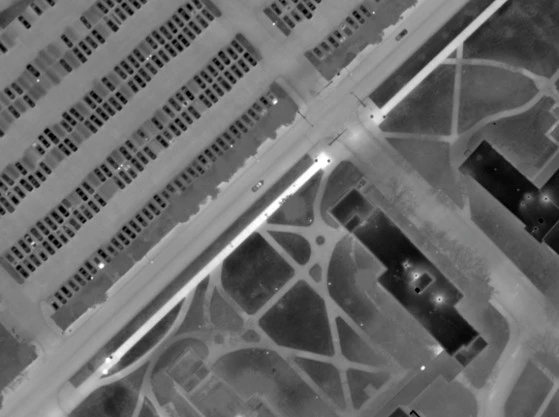
High-temperature hot water systems can lose significant energy through saturated insulation, jacket failure, vault losses, and breaches in buried supply or return lines. Because many of these problems remain hidden below grade, operators may not know where losses are occurring until system performance declines or a more disruptive failure develops.
High temperature hot water leak detection gives facility and engineering teams a network-wide view of suspected heat loss before excavation or emergency repair is required. AITscan maps and ranks thermal anomalies across the distribution system so teams can focus verification and maintenance on the areas showing the strongest evidence of abnormal heat transfer.
The financial impact extends beyond wasted fuel. HTHW failures beneath occupied campuses, secure facilities, streets, and other developed areas can lead to excavation, pavement restoration, contractor mobilization, service interruptions, and unplanned labor. Identifying a developing issue earlier can allow operators to convert an emergency response into scheduled maintenance.
Repeated aerial infrared surveys can also support long-term asset management by creating a thermal record of the network over time. That history can help engineering teams compare recurring anomalies, prioritize aging segments, support capital requests, and determine where future replacement or rehabilitation may be warranted.
For operators managing both hot-water and legacy steam infrastructure, AITscan also provides underground steam leak detection using the same aircraft-based infrared approach.