Commercial Roof Moisture Surveys

Aerial Infrared Roof Scanning for Commercial Facilities

AITscan uses aircraft-based infrared roof scanning to map suspected subsurface moisture across commercial roofs, campuses, school districts, and facility portfolios.

37+ Years

Of Infrared Expertise

50 States

Plus Alaska & Puerto Rico

Aircraft

Not Drones

Engineered

For Facility Decision-Makers

What Is Aerial Infrared Roof Scanning?

Aerial infrared roof scanning is a non-destructive inspection method that uses aircraft-mounted thermal imaging to identify thermal anomalies associated with moisture trapped beneath commercial roof membranes. After sunset, wet and dry roof areas can release stored heat at different rates, creating thermal patterns that can be captured and mapped from the air.

AITscan uses this data to create roof-by-roof moisture maps for commercial facilities, campuses, school districts, and multi-building portfolios. These findings help maintenance and capital-planning teams focus follow-up verification, evaluate repair needs, and make more informed decisions about roof replacement and service life.

AITscan has decades of experience performing aircraft-based infrared roof moisture surveys for complex facilities and roof portfolios. The resulting thermal data and reporting can support maintenance planning, engineering review, capital budgeting, and warranty documentation.
What an Aerial Infrared Roof Scan Delivers

Subsurface Moisture Mapping
Thermal anomalies associated with suspected subsurface moisture are mapped and georeferenced to specific roof areas, helping teams focus on locations that warrant follow-up verification.
Portfolio-Wide Coverage
Aircraft-based collection allows AITscan to survey multiple buildings, campuses, school districts, and facility portfolios within coordinated flight windows, creating a consistent dataset across the project.
Defensible Engineering Reports
AITscan delivers organized thermal imagery, mapped findings, and location-specific documentation that maintenance, engineering, and capital-planning teams can use to scope follow-up work, support budgeting, and inform repair or replacement decisions.

Aerial Infrared Roof Surveys for Complex Facilities

Universities & Colleges
AITscan helps universities and colleges evaluate roof moisture across multiple campus buildings.
K-12 School Districts
AITscan supports school systems with district-wide infrared roof surveys for maintenance.
Correctional Facilities
AITscan helps correctional facilities evaluate roof conditions across multi-building complexes.
Roofing Consultants
Use data to support moisture verification, planning, and broader portfolio analysis through AreaScanIR.

Why Use Aircraft for Infrared Roof Surveys?

Ground-based thermography and short-range platforms can be useful for localized roof inspections. For campuses, school districts, and multi-building portfolios, aircraft-based infrared roof surveys can provide efficient coverage across many roof areas within a coordinated thermal window.

AITscan uses aircraft-mounted infrared sensors selected for commercial roof moisture detection, with survey timing, acquisition altitude, and thermal conditions planned around the roof systems being evaluated. Collecting multiple roofs during the same flight also helps create a more consistent dataset across the portfolio.

This approach is especially useful for facility teams that need comparable roof moisture data across multiple buildings to support verification, repair planning, budgeting, and capital decisions. For projects requiring broader mapped thermal data, AITscan also provides aerial thermal mapping through Thermal MapIR.
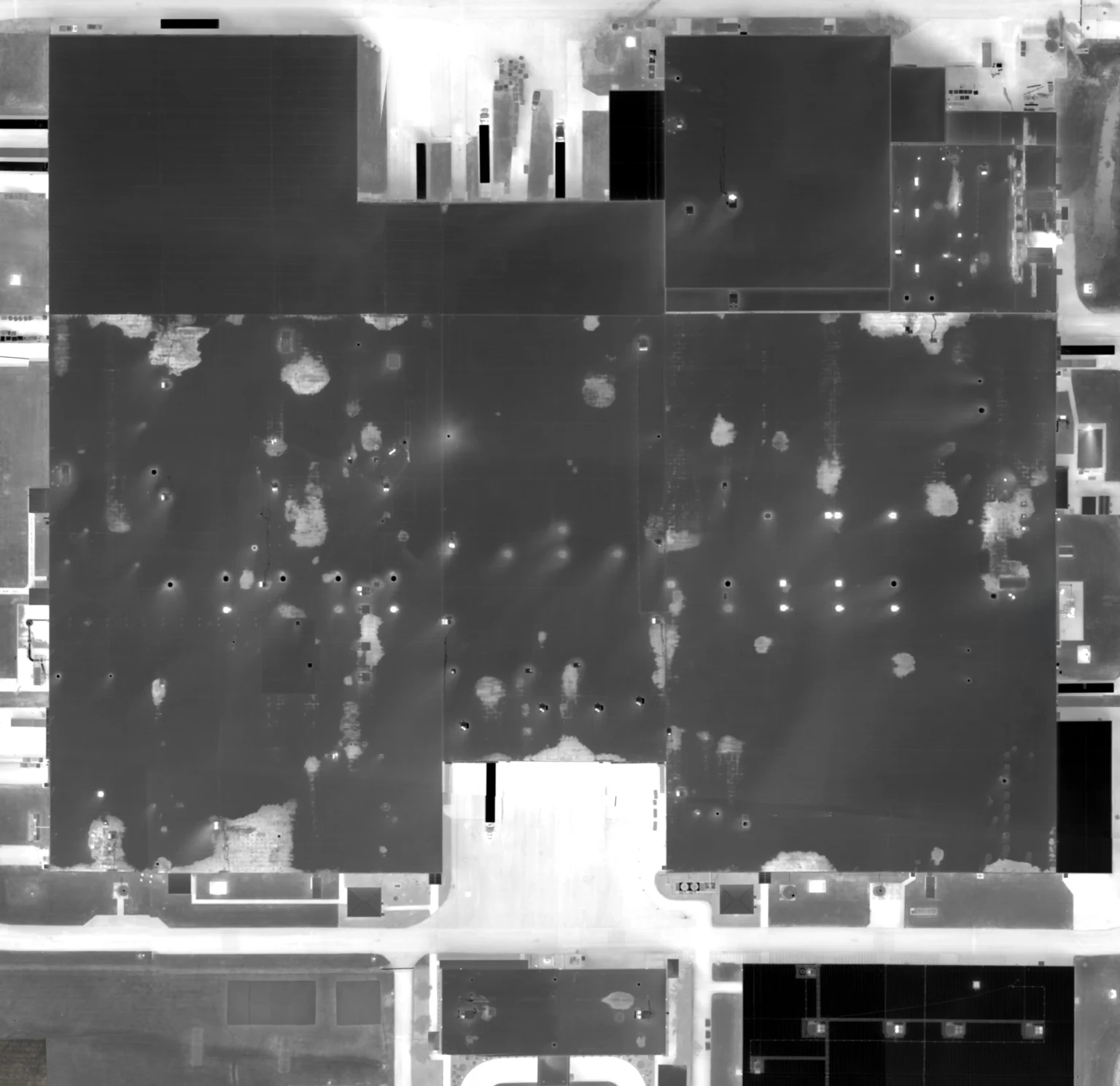
Aerial infrared roof scanning image showing thermal anomalies across a large commercial roof during a roof moisture survey

How an Aerial Infrared Roof Survey Works

01
Initial Conversation
We start with a short call to understand the facility, roofs in scope, project goals, and the decision-makers involved.
02
Technical Net Meeting
AITscan meets with facilities, engineering, and planning teams to review the survey methodology, project requirements, and expected deliverables.
03
Scheduled Aerial Survey
The flight is scheduled around the thermal conditions required for accurate roof moisture detection, with site coordination handled in advance.
04
Analysis & Reporting
Thermal imagery is processed and analyzed, then delivered in a location-specific report that supports verification, repair planning, budgeting, and capital decisions.

The Cost of Undetected Roof Moisture

Undetected roof moisture can become significantly more expensive once saturated insulation, decking, or surrounding roof components are affected. In some projects, delaying identification until visible failure occurs can increase repair or replacement costs by four to ten times compared with addressing a more limited problem earlier.

Aerial infrared roof scanning helps facility teams understand where suspected moisture is concentrated before making major repair or replacement decisions. For some portfolios, avoiding one unnecessary tear-off or extending the service life of a roof that does not require full replacement can offset a meaningful portion—or potentially all—of the survey cost.

Frequently Asked Questions

A typical campus or school district can often be scanned in a single night, while geographically distributed portfolios may require multiple flight windows depending on size, weather, and travel logistics.
Aerial infrared works best on low-slope and flat commercial roof systems, including built-up roofing, modified bitumen, TPO, EPDM, PVC, and many coated systems.
When surveys are performed under appropriate thermal conditions and analyzed by experienced thermographers, infrared can reliably identify moisture-related thermal anomalies that warrant on-roof verification.
Roof surveys require suitable thermal conditions, typically including a clear evening following adequate daytime solar loading and no recent rainfall, with timing varying by region and season.
Reports can include roof-by-roof site maps, thermal imagery, mapped anomalies, location-specific findings, and documentation to support repair planning, engineering review, and capital budgeting. Clients evaluating additional applications can also explore AITscan’s aerial infrared services.
Many facilities schedule infrared roof surveys every 2 to 5 years depending on roof age, climate, maintenance history, and portfolio condition, with more frequent inspections considered for aging or higher-risk roofs.

Ready to Evaluate Your Roof Portfolio?

Talk with AITscan about your commercial roofs, project scope, and inspection goals to determine whether an aerial infrared roof survey is a good fit.