In the realm of facility management and maintenance, detecting roof moisture before it becomes a significant issue is crucial. Aerial infrared roof scanning has emerged as a powerful tool, offering a cost-effective solution for early moisture detection and long-term savings. This method not only ensures the protection of assets but also optimizes maintenance budgets by preventing costly repairs. In this article, we will explore how aerial infrared thermography is transforming roof moisture detection and why it is an essential strategy for facility managers and building owners.
The Importance of Early Moisture Detection
Moisture intrusion is a common challenge for commercial roofs, leading to structural damage, mold growth, and energy inefficiencies. Early detection is critical to mitigating these risks, saving both time and money in the long run. Traditional methods of moisture detection can be invasive and limited in scope, often missing hidden moisture pockets.
Preventing Costly Repairs
By identifying moisture issues early, facility managers can address problems before they escalate. This proactive approach avoids the need for extensive repairs, which can be both disruptive and expensive. Moreover, early moisture detection contributes to better asset management, ensuring that roofing systems remain intact and functional.
Enhancing Asset Longevity
Routine monitoring using aerial infrared scanning prolongs the life of roofing materials. Detecting moisture intrusion early allows for timely maintenance, preserving the roof’s integrity and extending its lifespan.
Aerial Infrared Thermography: A Game Changer
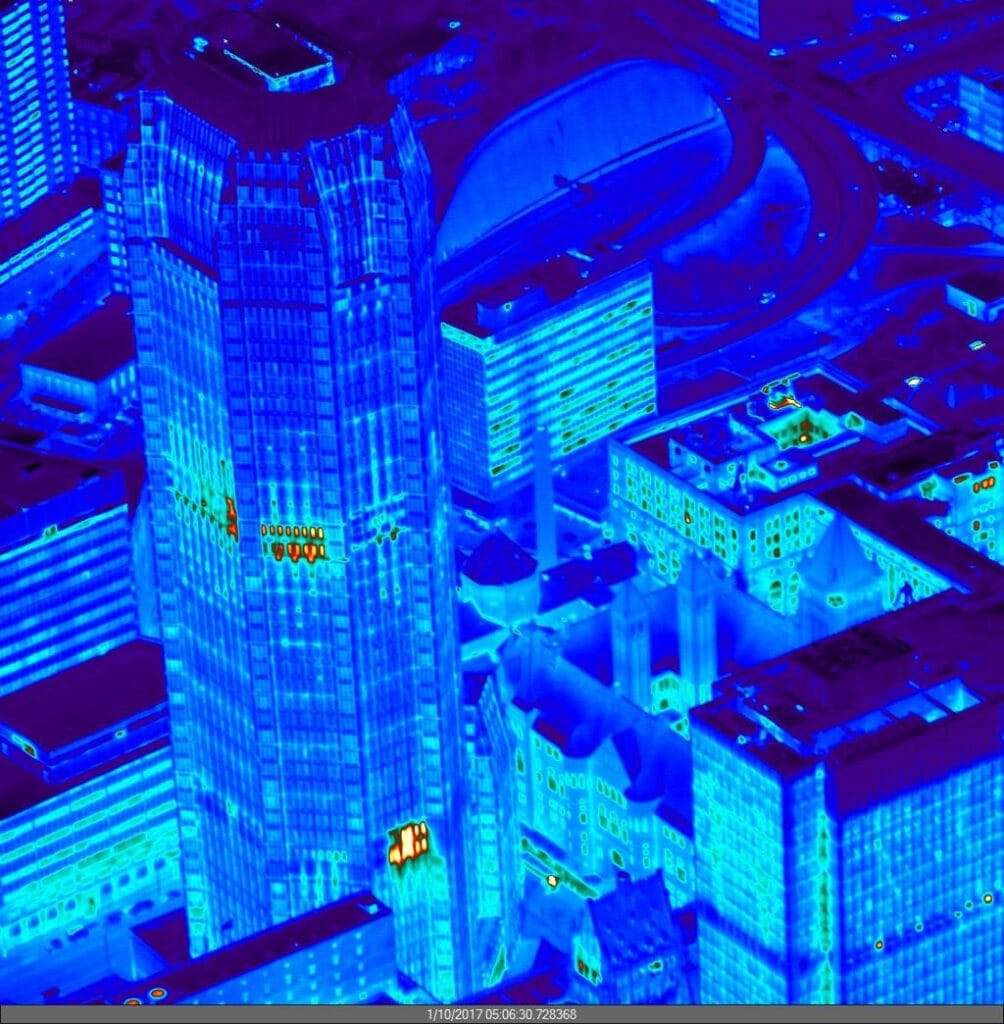
Aerial infrared thermography utilizes thermal imaging cameras mounted on aircraft to capture temperature variations on the roof surface. This technology is adept at identifying areas where moisture accumulation has altered thermal properties.
Advantages Over Traditional Methods
Unlike traditional inspection methods, aerial infrared scanning covers large areas quickly and non-invasively. This approach is particularly advantageous for large-scale facilities, campuses, and infrastructure systems where comprehensive inspection is challenging.
High-Resolution Thermal Imaging
The high-resolution thermal imaging provided by aircraft-based surveys allows for precise identification of moisture-laden areas. This precision is critical for effective maintenance planning and resource allocation.
Cost-Effectiveness and Long-Term Savings
The initial investment in aerial infrared scanning is outweighed by the long-term savings it offers. Facility managers can prioritize maintenance activities based on detailed data, optimizing budgets and resource use.
Reducing Energy Loss
Moisture in roofing materials can lead to increased energy consumption. By detecting and addressing moisture issues, facilities can improve energy efficiency, reducing operational costs.
Optimizing Maintenance Budgets
With detailed moisture mapping, facilities can allocate maintenance budgets more effectively, focusing resources on areas that require immediate attention and deferring less critical repairs.
Real-World Applications and Success Stories
AIT Scan, a leader in nationwide infrared inspection, has successfully implemented aerial infrared surveys across various sectors. Their expertise in aircraft-based infrared scanning is evident in the multitude of projects they’ve undertaken.
Case Study: University Campus
For a large university campus, AIT Scan conducted a comprehensive infrared roof moisture survey. By identifying areas of concern, the university could prioritize repairs, saving on potential future expenditures and ensuring uninterrupted operations.
Municipal Infrastructure Projects
Municipalities have leveraged AIT Scan’s services for infrastructure inspection, detecting moisture in roofing systems, and other potential issues in public buildings, leading to enhanced asset management and reduced maintenance costs.
Choosing the Right Infrared Inspection Method
When selecting an infrared inspection method, it is essential to consider the scale and requirements of the project. Aircraft-based infrared scanning is particularly suited for extensive projects where coverage and detail are paramount.
Comparing Aircraft and Drone Inspections
While drones offer flexibility for smaller areas, aircraft provide comprehensive coverage for larger facilities, making them ideal for commercial roof portfolio inspection and campus-wide surveys. For more insights, visit this comparison page.
Expertise and Experience
AIT Scan’s 37+ years of experience in the field ensures high-quality results and reliable data, crucial for informed decision-making in maintenance and capital planning.
Integrating Infrared Scanning into Maintenance Strategies
Integrating aerial infrared scanning into your maintenance strategy involves understanding its value and aligning it with your facility’s needs. This integration can lead to significant improvements in predictive maintenance and energy management.
Developing a Predictive Maintenance Plan
By using data from infrared inspections, facility managers can develop predictive maintenance plans that preemptively address potential issues, enhancing operational efficiency and reducing downtime.
Capital Planning and Risk Management
Infrared scanning supports capital planning by providing detailed insights into the condition of roofing assets, allowing for better risk management and financial forecasting.
Conclusion
Comprehensive roof moisture detection through aerial infrared scanning is a strategic investment for facility managers and building owners. It not only aids in early moisture detection but also ensures long-term savings and asset longevity. By adopting this technology, you can enhance your maintenance strategies, optimize resources, and protect your investments. Discover more about how AIT Scan can assist you in achieving these goals by visiting their resources and insights page.