In the complex environment of university campuses, facility management is a multifaceted challenge that demands both precision and foresight. With an increasing emphasis on sustainability and energy efficiency, campuses are turning to innovative solutions like infrared mapping services to optimize their infrastructure management. This guide explores how aerial infrared thermography can play a pivotal role in enhancing energy efficiency and sustainability across university facilities.
Understanding Infrared Mapping Services for Campuses
Infrared mapping services utilize advanced thermal imaging technology to provide comprehensive insights into the energy performance of campus facilities. Aerial infrared thermography, a key component of these services, involves using aircraft-based infrared scanning to capture thermal data over large areas. This method is particularly advantageous for university campuses due to its ability to cover expansive grounds quickly and effectively.
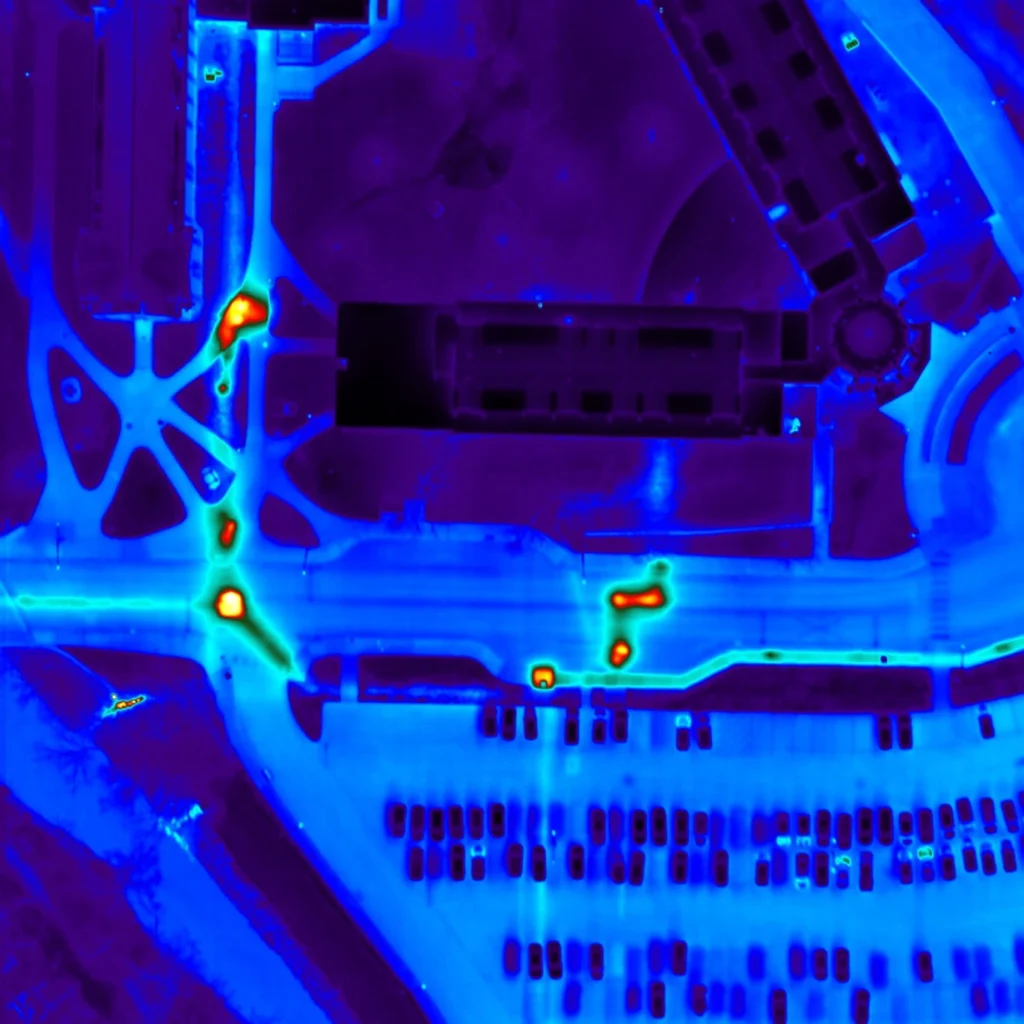
By leveraging aerial infrared scanning, facility managers can identify thermal anomalies indicative of energy inefficiencies, such as heat loss through building envelopes, poorly insulated roofs, or underground steam leaks. These insights allow for targeted maintenance and repair efforts, leading to improved energy conservation and reduced operational costs.
The Role of Infrared Mapping in Energy Management
Campus facility managers face the critical task of maintaining energy-efficient operations, which is where infrared mapping becomes invaluable. By identifying and addressing issues such as wet roof insulation and steam distribution leaks, infrared surveys help campuses reduce energy waste and carbon footprints.
- Roof Moisture Detection: Infrared roof scanning can detect moisture ingress in roofing systems, a common cause of energy inefficiency. By pinpointing areas of wet insulation, campuses can prioritize repairs and prevent further energy loss.
- Underground Steam Leak Detection: Aerial infrared surveys can locate steam leaks in underground distribution systems, which are often challenging to detect through traditional means. This capability is crucial for maintaining efficient campus heating systems.
Enhancing Sustainability with Infrared Thermography
As universities strive to meet sustainability goals, infrared thermography services offer a path to more environmentally friendly operations. By optimizing energy use and reducing waste, campuses can significantly lower their environmental impact.
Infrared mapping not only aids in the detection of existing issues but also enables predictive maintenance strategies. By regularly monitoring thermal data, facility managers can anticipate problems before they escalate, allowing for proactive interventions that prevent energy waste and extend the lifespan of campus infrastructure.
Applications in Solar Field Management
Infrared thermography is also applicable in the maintenance of solar fields, a growing component of campus energy strategies. Aerial infrared surveys can assess the performance of solar panels, identifying thermal anomalies that may indicate malfunctioning cells or connectivity issues.
By ensuring optimal performance of solar assets, campuses can maximize their renewable energy production and further their commitment to sustainability. For more information on solar field infrared surveys, visit AIT Scan’s Solar Field Infrared Surveys.
Advantages of Aircraft-Based Infrared Scanning
While drone-based inspections are popular in some contexts, aircraft-based infrared scanning offers distinct advantages for large university campuses. The ability to cover extensive areas in a single flight makes it ideal for surveying multiple buildings and infrastructure systems.
- Comprehensive Coverage: Aircraft can survey entire campuses or large infrastructure networks without the need for multiple flights or repositioning, ensuring consistent and thorough data collection.
- Rapid Data Acquisition: The speed of aircraft-based scanning allows for quick turnaround times, delivering actionable insights faster than many ground-based methods.
To learn more about the benefits of aircraft-based infrared scanning, consider exploring AIT Scan’s Aerial Infrared Roof Scanning services.
Real-World Success Stories
Universities across the United States have successfully implemented infrared mapping to enhance their facility management strategies. For instance, a major university in the Midwest utilized aerial infrared surveys to detect and repair hidden steam leaks, resulting in significant energy savings and a reduction in greenhouse gas emissions.
Such success stories highlight the potential of infrared mapping to transform campus facility management, offering both economic and environmental benefits.
Next Steps for Campus Facility Managers
For facility managers looking to harness the power of infrared mapping services, the first step is to conduct a comprehensive campus utility inspection. Understanding the current state of infrastructure systems is crucial for developing effective maintenance and energy management plans.
Partnering with an experienced provider like AIT Scan ensures access to expert insights and cutting-edge technology. As a nationwide leader in aerial infrared thermography, AIT Scan offers a range of services designed to meet the unique needs of university campuses. Visit AIT Scan’s UniversityScanIR for tailored solutions.
In conclusion, infrared mapping services are a powerful tool for enhancing the efficiency and sustainability of university campus facilities. By leveraging these services, campuses can reduce energy consumption, lower operational costs, and contribute to a more sustainable future. To explore how AIT Scan can support your campus facility management needs, reach out for a consultation today.