Introduction
In the world of commercial building management, maintaining the integrity of your assets is paramount. One area often overlooked until problems arise is the roof. Aerial infrared roof moisture scanning emerges as a powerful tool, offering facility managers and building owners a way to prevent costly repairs by detecting moisture issues early. This article explores how this technology can save significant costs and enhance the ROI for commercial building portfolios.
Understanding Aerial Infrared Roof Moisture Scanning
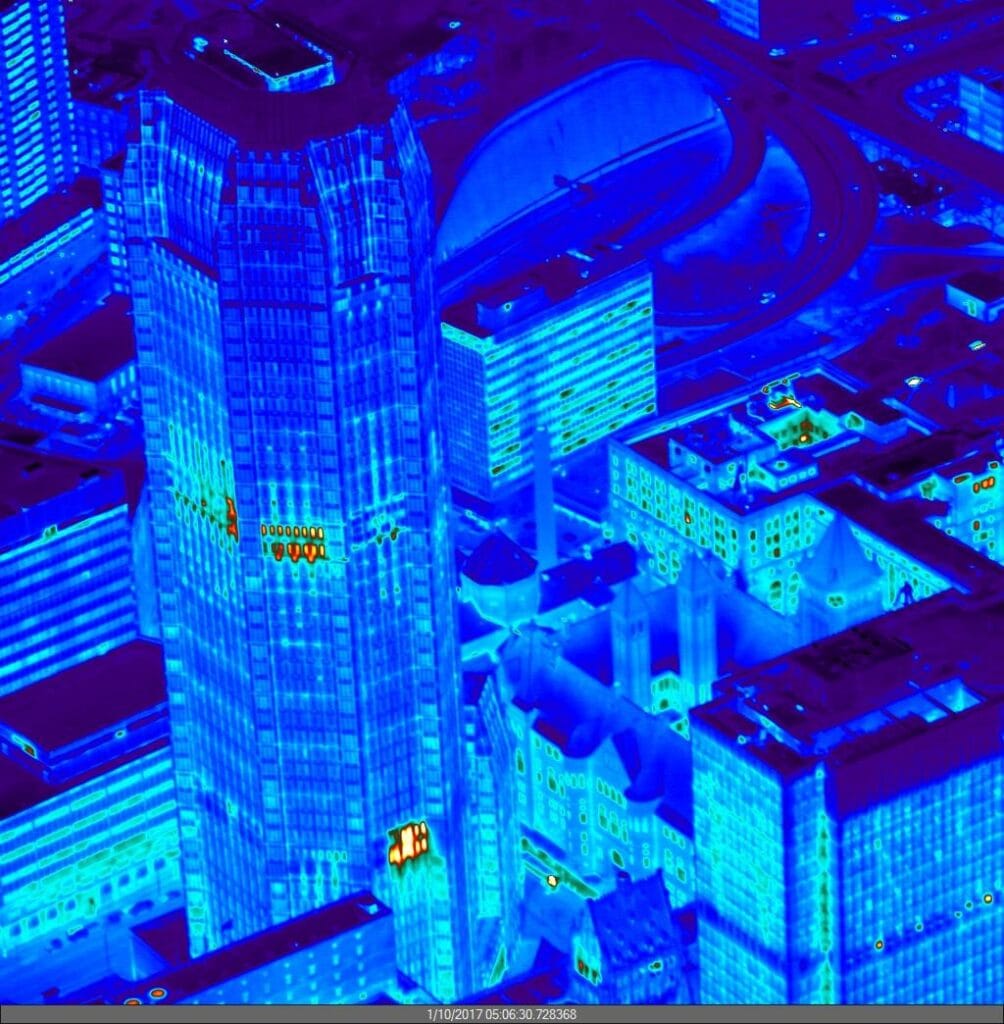
Aerial infrared roof moisture scanning leverages advanced thermal imaging to identify moisture trapped within roofing systems. Unlike traditional inspections, which are often limited to visible surface evaluations, aerial thermography detects thermal anomalies indicative of moisture beneath the surface. This non-destructive testing method provides a comprehensive view of roof conditions, crucial for proactive maintenance.
How It Works
Using aircraft-mounted infrared cameras, large-scale aerial thermal imaging covers extensive areas efficiently. The technology detects heat variations that indicate moisture presence, allowing for precise wet insulation detection. This method is particularly advantageous for large commercial complexes and campuses, where manual inspections would be time-consuming and costly.
Preventing Expensive Repairs with Early Detection
Moisture trapped in roofing materials can lead to significant structural damage if left unchecked. Early detection through aerial infrared roof scanning enables timely interventions, preventing minor issues from escalating into major repairs.
The Cost of Ignoring Roof Moisture
- Structural Damage: Prolonged moisture exposure can compromise structural integrity, leading to expensive restoration projects.
- Mold Growth: Moist environments are breeding grounds for mold, posing health risks and requiring costly remediation.
- Energy Inefficiency: Wet insulation loses its effectiveness, increasing energy costs due to higher heating and cooling demands.
By identifying these issues early, facility managers can prioritize repairs and allocate budgets more effectively, enhancing overall asset management.
Maximizing ROI with Aerial Infrared Scanning
Investing in aerial infrared scanning yields significant returns by extending the lifespan of roofing systems and reducing maintenance costs. The data obtained from these surveys aids in strategic capital planning and predictive maintenance, ensuring resources are optimally utilized.
Strategic Asset Management
Thermal roof inspection data provides invaluable insights for asset management teams. By understanding the current state of roof systems across a portfolio, decision-makers can schedule repairs during optimal times, minimizing disruptions and maximizing resource efficiency. This strategic approach not only prolongs the life of roofing assets but also ensures that budgets are allocated effectively, reducing unnecessary expenditures.
Applications Beyond Roof Inspections
While aerial infrared scanning is highly effective for roof moisture detection, its applications extend beyond this. The technology is instrumental in identifying leaks in underground utility systems, including steam and hot water lines, which are critical for campus infrastructure and district energy systems.
Underground Utility Leak Detection
Infrared thermography services are vital for detecting leaks in steam distribution and condensate return systems. By locating these leaks early, managers can prevent energy loss and avoid costly repairs. This is particularly beneficial for university campuses and municipalities, where such leaks can disrupt services and incur significant costs.
Choosing the Right Inspection Method
Understanding the differences between aircraft-based and drone or handheld inspections is crucial for decision-makers. Aircraft-based infrared scanning offers advantages in coverage and efficiency, especially for large-scale projects. This method ensures comprehensive data collection over extensive areas, providing a detailed view that smaller-scale approaches might miss.
When to Use Aircraft-Based Scanning
- Large-Scale Projects: Ideal for facilities with extensive roofs or multiple buildings.
- Time-Sensitive Inspections: Quick data acquisition without the need for multiple site visits.
- Geographically Dispersed Assets: Efficiently covers assets spread over wide areas.
For more information on the benefits of aerial infrared roof scanning for capital planning, visit AIT Scan’s dedicated page.
Conclusion
Aerial infrared roof moisture scanning stands as a formidable tool in the arsenal of facility management and asset protection. By offering early detection of potential issues, it prevents costly repairs, enhances energy efficiency, and maximizes ROI. As commercial building portfolios grow increasingly complex, integrating this technology into regular maintenance plans is a strategic move. For those interested in enhancing their roof inspection processes, consider consulting with experts like AIT Scan to unlock the full benefits of aerial infrared scanning.