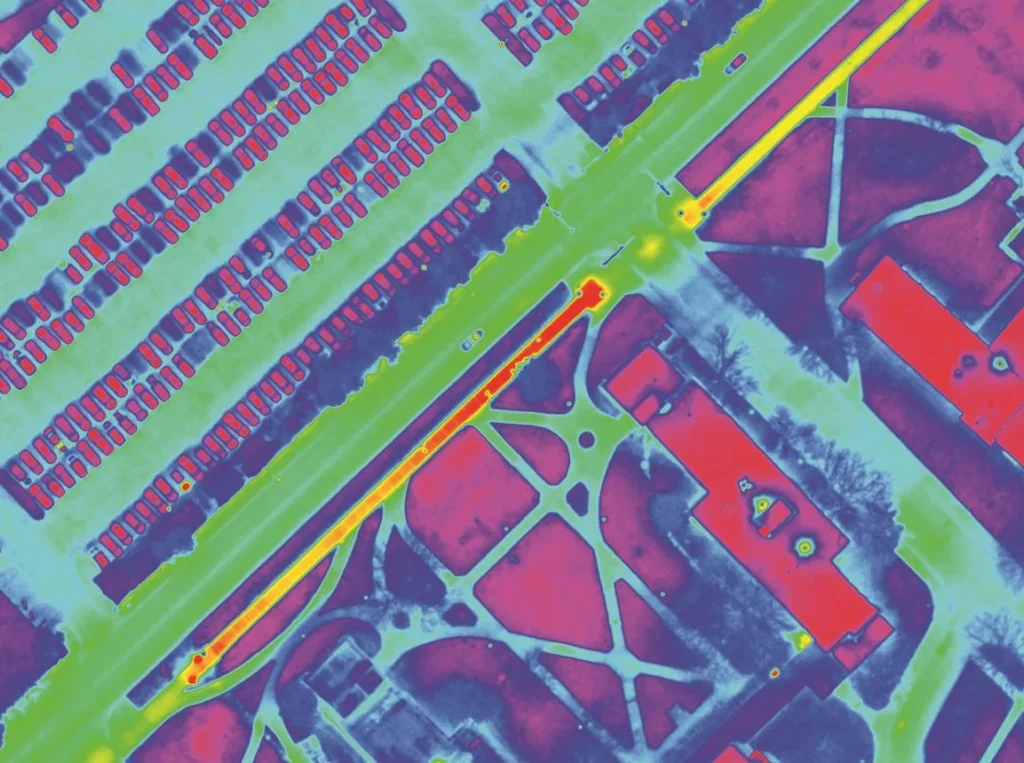
In the realm of facility management, ensuring the safety and efficiency of high-temperature hot water systems is paramount. These systems are integral to the operations of large commercial buildings, campuses, and industrial facilities, yet they are often susceptible to thermal inefficiencies and potential hazards. Enter infrared inspection, a powerful diagnostic tool that can identify issues before they escalate into costly repairs or safety incidents. By leveraging advanced aerial infrared thermography, facility managers can maintain system integrity and extend the lifespan of critical infrastructure components.
Understanding High-Temperature Hot Water Systems
High-temperature hot water systems are essential in many industrial and commercial settings, providing the necessary heat for processes, space heating, and domestic hot water. These systems typically operate at high temperatures, which inherently introduces risks associated high temperature operations.
Such systems are composed of boilers, distribution piping, and heat exchangers, each requiring meticulous maintenance to prevent thermal inefficiencies and potential hazards. Infrared inspection services play a pivotal role in this maintenance regime by providing real-time data on the system’s thermal performance.
The Role of Infrared Inspection in System Maintenance
Infrared inspection involves the use of infrared cameras to detect heat emissions from various components of a hot water system. This non-invasive technique allows for the identification of thermal anomalies indicative of inefficiencies or potential failures.
Identifying Thermal Inefficiencies
Infrared thermography services can pinpoint areas of excessive heat loss in piping or equipment, revealing insulation failures or leaks. By mapping thermal patterns, facility managers can prioritize maintenance and repairs more effectively, thus reducing unnecessary energy consumption.
Mitigating Potential Hazards
Beyond efficiency, safety is a critical concern. High-temperature hot water systems can pose significant risks if not properly maintained. Aerial infrared scanning can identify overheating components or leaks that, if left unchecked, could lead to catastrophic failures.
Real-Time Monitoring and Predictive Maintenance
Real-time monitoring through infrared inspection provides a dynamic view of a system’s operational status. This approach aligns with predictive maintenance strategies, allowing facility managers to address issues proactively rather than reactively.
Benefits of Predictive Maintenance
- Reduces the likelihood of unscheduled downtime by addressing potential failures early.
- Optimizes maintenance schedules based on actual system conditions rather than predefined intervals.
- Prolongs the lifespan of system components, enhancing overall asset management.
By integrating predictive maintenance with infrared inspection, facilities can achieve a significant return on investment through energy savings and reduced repair costs.
Applications of Aerial Infrared Thermography
AIT Scan, a leader in aircraft-based infrared scanning, offers nationwide infrared inspection services tailored to large-scale facilities. For high-temperature hot water systems, aerial infrared thermography provides comprehensive coverage, especially in sprawling campuses or industrial complexes.
Use Cases
- Underground Hot Water Leak Detection: Identify and locate leaks in buried piping to prevent heat loss and potential ground damage.
- Commercial Roof Moisture Inspection: Detect areas of wet insulation that may affect heating efficiency.
- Solar Field Infrared Surveys: Monitor solar panel performance and detect thermal anomalies that could indicate inefficiencies.
Advantages of Aircraft-Based Infrared Scanning
While drones are popular for small-scale inspections, aircraft-based infrared scanning offers distinct advantages for large-area assessments. AIT Scan’s approach ensures rapid data collection across extensive geographical areas, making it ideal for campuses and industrial parks.
Aircraft-based scanning can cover more ground in less time, providing detailed thermal mapping that informs strategic decision-making and facility management. Learn more about the benefits of aircraft-based inspections through this comparison.
Implementing an Infrared Inspection Program
To maximize the benefits of infrared inspection, facility managers should develop a structured inspection program. This involves regular scans, data analysis, and proactive maintenance planning.
Steps to Implement
- Conduct an initial assessment to establish baseline thermal performance.
- Schedule regular infrared inspections to monitor changes over time.
- Analyze thermal data to identify trends and prioritize maintenance tasks.
- Integrate findings into a predictive maintenance strategy to optimize system performance.
For educational institutions, AIT Scan offers specialized services like the SchoolSystemScanIR, designed to ensure the safety and efficiency of school infrastructure.
In conclusion, enhancing the safety and efficiency of high-temperature hot water systems is achievable through strategic use of infrared inspection. By identifying thermal inefficiencies and potential hazards early, facility managers can significantly reduce operational risks and costs. AIT Scan’s expertise in aerial infrared thermography provides a comprehensive solution for maintaining the integrity of these vital systems. To explore how AIT Scan can assist your facility, consider scheduling a consultation today.